Just Like Clockwork
Oct 20, 2026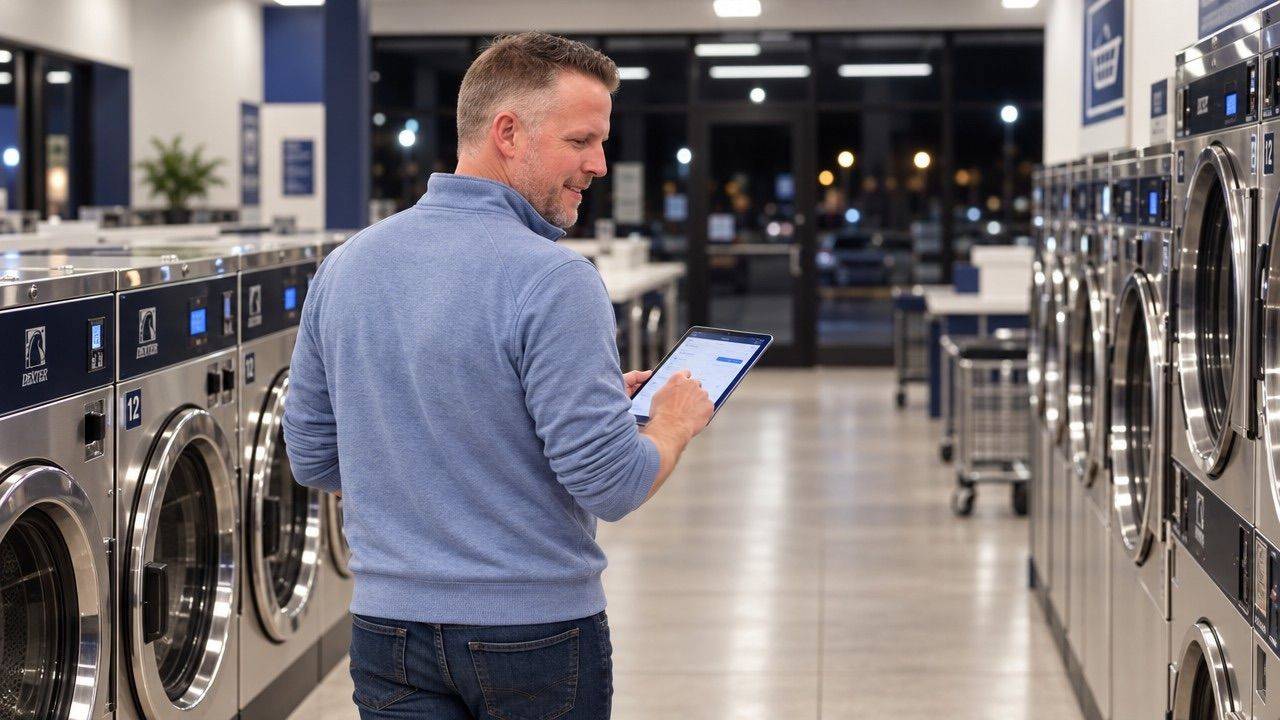
Just Like Clockwork
Why I never announce a price increase, and the exact system we use to raise prices across three stores without the drama.
Key takeaways
- We have never announced a price increase to customers.
- Every washer and dryer goes up 25 cents a year, and Wash and Fold goes up 5 cents a pound every six months.
- Digital signs switch at 12:01 a.m., and the team hears about it at 8 p.m. the night before.
- Rewards percentages and order minimums stay the same.
The Feature
Before I ever owned a laundromat, I ran one of the largest captive property and casualty insurance offices in Oklahoma. And every single year, I dreaded the same season.
Rate increase season.
Every year, premiums went up. And every year, my staff and I picked up the phone and called thousands of customers to warn them. We thought we were doing the right thing. We wanted to soften the blow.
It never worked.
These were people we had relationships with. We had spent hours earning their business. Then a 5% to 10% rate increase would hit, usually less than $20 a month, and they were headed for the door to find somewhere cheaper. Customers were almost never understanding. They blamed us.
One out of every seven calls ended in a cancellation.
It was the worst part of the job. Day after day of bracing for the next call wore my whole team down.
That season taught me something I've never forgotten. When you warn people about a price increase, you don't soften anything. You just hand them a few extra weeks to stew about it.
Warning people doesn't soften the blow. It just gives them more time to get mad.
So when we opened Wash Bar, I made a decision from day one. We would never announce a price increase. Not on a sign, not on social media, not in a conversation at the folding table.
I'm in the habit of helping people, not getting beat up by people.
That's not about hiding anything. Our prices are always posted, and they're always accurate. It's about refusing to turn a quarter into a crisis.
The night everyone else is celebrating
Here's what our price increase actually looks like.
For years, it happened on New Year's Eve. While most people were out celebrating, I was on my card reader's website raising the price on every washer at every store.
Our dryers are newer, but they still run on pulse. If you know, you know. For everyone else, that means the price can't be changed from a computer. I have to drive to each store and go dryer to dryer, programming every machine by hand. It takes about 30 seconds a dryer.
Wash and Fold is the easy part. I pull up our cloud POS on my iPad and raise the price per pound, store by store. All three locations take less than 5 minutes. We do that twice a year, every January and July.
Just like clockwork.
That's the whole secret. There's no meeting, no debate, and no agonizing over whether this is the right year. The date is the date.
Raising prices isn't an event at Wash Bar. It's a calendar entry.
This year, we're running an experiment
This year, I'm breaking my own pattern. Our increase moves up from January 1 to November 1. Wash and Fold goes up a nickel a pound on the same day, just like it would in January.
November and December are our two busiest back-to-back months of the year. I want to see if getting the increase in place before that rush turns into a real jump in revenue. I'll look hard at the numbers next spring and decide whether it stays. I may even move our July Wash and Fold increase up to June.
Am I worried? Not really.
I do not anticipate any issues.
Never put a price on paper
Every sign in every Wash Bar is digital. I can load the new prices days or even weeks ahead, and at 12:01 a.m. the whole system flips over on its own. By the time the first customer walks in, every price in the building is right.
I never print prices on paper. Ever.
If your prices are printed on paper, every increase turns into a project.
Paper signs mean someone has to tape up a new price, and a freshly taped sign announces the increase for you. Digital signs simply change. Most of the time, the average customer doesn't even realize the price went up.
Everything goes up a quarter
We don't charge one machine more and another less. Every washer and every dryer goes up exactly a quarter.
Our washers come in even 20 pound increments, and our prices climb in even $2 steps to match. Customers never get told the pattern, but they figure it out fast. They always know what the next size up costs.
Stores with no pattern or rhythm to their pricing are chaos, and I guarantee your customers realize it.
What doesn't go up
Our rewards program stays the same. VIP members get a percentage based bonus when they load money onto their card, and that percentage never changes. Here's the part most owners miss.
As the price goes up, the percentage stays the same, but the discount increases.
Every increase makes the VIP card worth a little more. Your best customers get a better deal, automatically.
Our minimums don't move either. Wash and Fold has a $20 minimum. Pickup and delivery has a $30 minimum, and anything over that gets free pickup and delivery in our service area. Fuel and vehicle costs have gone up, but our average delivery order still lands around $60. A low barrier gets people in the door, and once they're in, they spend twice the minimum.
Raise the price. Keep the door low.
And competitor pricing? I haven't checked it in years. That's a bigger conversation, and it's coming in Part 4.
From the Floor
The attendants who warned everybody
The first year we did increases, I made a mistake. I told our team a couple of weeks ahead of time.
I found out later that our attendants had been warning customers. In their minds, they were being a good friend. In reality, they gave every customer two weeks to get upset about a quarter. It caused a lot of stress that never needed to happen.
I'm also pretty sure a few team members blamed me for the increase. They felt for the customers, and they saw me as the bad guy.
The attendants thought they were being a friend to our customers.
Two things changed that.
First, increases became need-to-know. Now our team hears about it at 8 p.m. the night before, through our company communication app, and not a minute sooner.
Second, and this is the big one, we started explaining in staff meetings throughout the year where their raises come from. We give raises twice a year at Wash Bar. When our team realized those raises are paid for by these price increases, everything flipped.
Your team will either defend the increase or apologize for it.
Now they have skin in the game. When a customer grumbles, our attendants calmly explain how the cost of doing business has gone up, and they do it better than I could.
I inadvertently created a bunch of team members who are now economists.
Steal This
The Clockwork Kit
|
Part one: build a price ladder. Our washers step up in even 20 pound sizes, so our prices step up in even $2 jumps. Customers never get told the pattern. They just pick it up.
Extra dry time is 25 cents for every 4 minutes. When the increase hits, every machine goes up a quarter, and the ladder stays perfectly even. Part two: the night-before checklist. 1. Weeks ahead: load the new prices into your digital signs and set them to switch at 12:01 a.m. 2. Weeks ahead: pick your date and put it on the calendar. Don't tell customers, and don't post it. 3. 8 p.m. the night before: send your team the message below. 4. That night: update washer prices on your card reader site. 5. That night: if your dryers run on pulse, visit each store and program every dryer at the machine. Budget about 30 seconds a dryer. 6. That night: update your Wash and Fold price per pound in your POS. Leave your minimums alone. 7. Next morning: spot check that the signs, the machines, and the POS all match. Part three: the 8 p.m. message. This is the one I send. Copy it, and make it sound like you.
|
Common Questions
What owners ask about price increases
Should a laundromat announce a price increase?
We never do. At my insurance office, we warned thousands of customers about rate increases every year, and one in seven canceled. Warning people gives them more time to get upset. At Wash Bar, prices are always posted and accurate, but we don't announce the change.
How do you change prices on laundromat machines?
Washer prices update from our card reader website. Our dryers run on pulse, so each one is programmed by hand, about 30 seconds a dryer. Wash and Fold updates in our Clean Cloud POS in under 5 minutes for all three stores, and our digital signs are scheduled to switch at 12:01 a.m.
How should laundromat prices be structured?
Use an even ladder. Our washers come in 20 pound increments priced in $2 steps: $4.25, $6.25, $8.25, and $10.25. Every machine goes up the same quarter, so the pattern always holds.
What should I tell my employees about a price increase?
Tell them the night before, not weeks ahead. We message our team at 8 p.m. with a short script, and we explain in staff meetings throughout the year that price increases help pay for their twice-a-year raises.
Should I raise Wash and Fold minimums when prices go up?
We don't. Our minimum is $20 for drop-off and $30 for pickup and delivery, with free pickup and delivery over $30 in our service area. Our average delivery order still runs around $60.
The Gap
Systems don't get nervous
In Part 1, I told you about the night I sat up second-guessing a quarter. Here's what fixed that for good. It wasn't courage. It was a system. Once the date, the steps, and the message were set, there was nothing left to be nervous about.
That's what the Laundry Advisors community is built around. It's a group of owners who are actively growing and scaling, and who share the systems that actually work in their stores. Members get trainings, weekly video calls, and resources covering staffing and HR, marketing, SOPs, equipment mix, customer retention, and scaling to multiple locations.
If you want help building your own pricing calendar, or fixing whatever else is holding your store back, let's get on a call. It's free, and you'll leave with a clearer plan either way.
Schedule your complimentary callNext week in Part 3: what customers actually do after a price increase, the exact words we use when someone complains, and the math that ends the argument.
Stay connected with news and updates!
Join our mailing list to receive our weekly blog.
Don't worry, your information will not be shared.
We hate SPAM. We will never sell your information, for any reason.