The Laundromat Kids Corner: Build a Children’s Area That Changes Your Community
Mar 09, 2026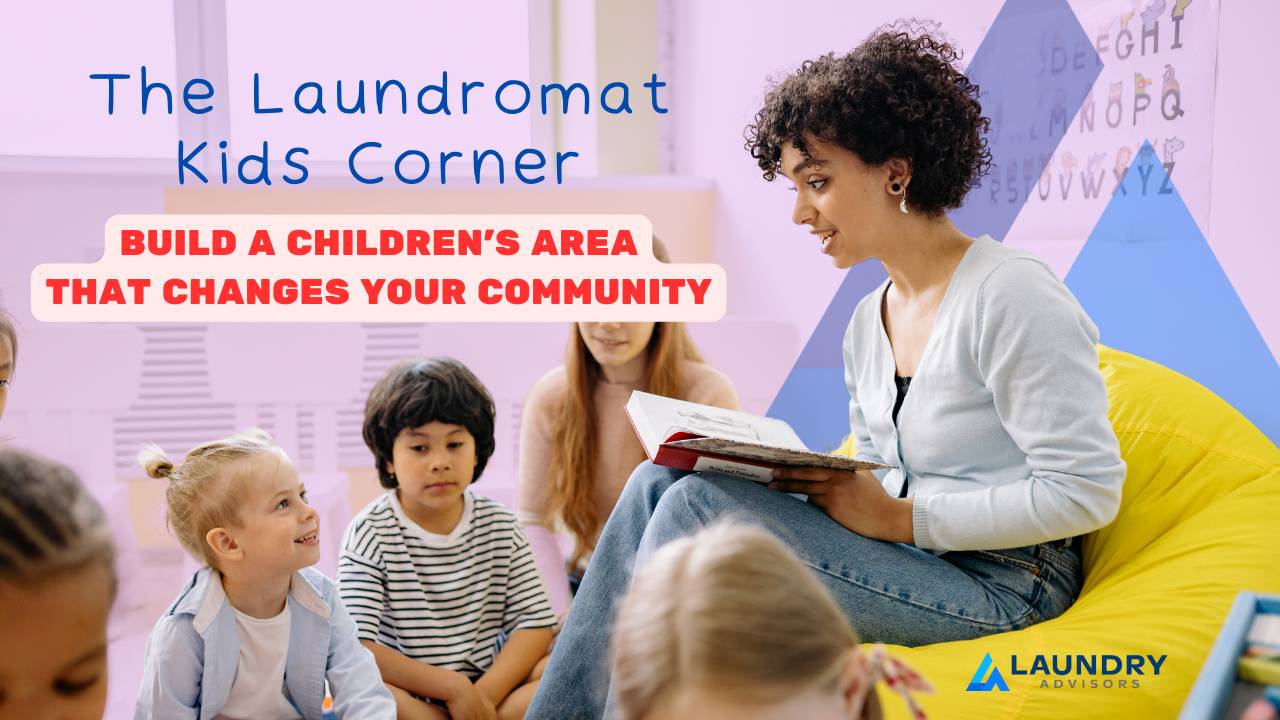
Because “waiting on the spin cycle” is a lot easier when a kid has something to do besides parkour off your folding tables.
Every laundromat owner knows the truth, families aren’t just washing clothes in our stores, they’re living life in our stores. Kids are doing homework on the counter. Parents are juggling baskets, toddlers and time. Some families are stretched thin, and the laundromat is one of the few places they can reliably show up each week.
That’s why a simple children’s area can be more than “nice,” it can be a real community impact engine. You don’t need a massive remodel or a nonprofit board to start. You need intention, consistency and a plan that doesn’t turn into chaos at 4:15 pm.
What a great kids area actually does for your store
- Creates a calmer environment (less crying, less running, fewer “don’t touch that” moments).
- Builds loyalty with parents because you made their weekly chore easier.
- Improves safety by giving kids a defined space away from carts, doors and hot dryers.
- Strengthens your brand locally as “the laundromat that cares,” not just “the laundromat that’s open.”
Step 1: Pick the right spot and design it like you’re the safety inspector
Location: Visible from seating and folding tables. If a parent can’t see their child, it won’t get used.
Non-negotiables:
- Clear sightlines
- No access to back rooms, vending electrical or chemical storage
- Nothing climbable near windows/doors
- Soft flooring (foam tiles) or a low-pile rug that can be washed regularly
- Simple signage: “Kids Area, children must be supervised”
Pro tip: Keep it intentionally small at first. It’s easier to expand a success than to shrink a mess.
Step 2: Build a take-home children’s book library (simple, honor-based, powerful)
This is one of the highest-impact ideas on your list because it travels home. You’re not just entertaining a child, you’re helping them build a habit.
How to set it up
- Bookcase + bins: Use front-facing bins for younger kids (they choose by cover, not by spine).
- Two-tier system:
- Read Here books (sturdier board books, easy to sanitize)
- Take Home books (clearly labeled, “Take one, keep one, bring one back if you can.”)
- Donation pipeline: Local churches, school book fairs, library discards, community drives, Rotary Clubs, etc.
- Weekly refresh: Assign a staff member a 10-minute “Kids Corner reset” checklist.
Simple signage that works
“Kids can take a book home for free. If you’re able, bring a book next time to help another child.”
No guilt. No paperwork. Just generosity with structure.
Step 3: Add interactive learning stations (low cost, high value)
Keep the activities quiet, durable and easy to clean. Your goal is “engaged,” not “sugar-powered.”
- Magnetic letters + a small whiteboard
- Coloring pages (branded Wash Bar (your laundromat)-style pages if you want to get fancy) + crayons
- Simple puzzles and matching games
- “Word of the Week” board: kids find letters, spell the word, draw a picture
- STEM bins: gear sets, snap-together blocks, pattern cards
- Quiet reading nook with a small bench and 2-3 pillows (washable covers)
Avoid: Anything with 47 tiny pieces, slime, kinetic sand, or anything that becomes a choking hazard in a week.
Step 4: Offer free tutoring afternoons through local student partnerships
Partner with a local high school, community college, or university so students can earn community service hours while tutoring kids. Done right, this becomes a weekly rhythm families depend on.
How to implement without creating liability headaches
- Start small: 1 day per week, 90 minutes (example: Tuesdays 4:00-5:30 pm).
- Work through an organization: National Honor Society, education department, student-athlete volunteer hours, or a campus service office.
- Set boundaries: tutoring happens in a defined public area, never in a back room, never off-site, security cameras with "eyes" on the area.
- Adult presence: a staff member or approved program coordinator is always visible in the area.
- Scope: homework help, reading practice and basic math, not “test prep guarantees.”
- Parent supervision: parents remain responsible for their children at all times.
Make it measurable: Put up a simple board, “This month we helped with 63 homework assignments.” People love seeing progress.
Step 5: After-school snacks (and how to do it responsibly)
Snacks sound small, but for some kids, they’re the highlight of the day. Keep it simple and safe.
- Timing: Same day as tutoring works best.
- Options: granola bars, applesauce pouches, crackers, bottled water (NEVER junk food from the vending machine).
- Allergy-friendly: clearly label and avoid peanuts if you can. Post a disclaimer.
- Sponsor it: ask a local bank, insurance agency, church, or grocery store to fund “Snack Day” monthly.
This is one of those moments where a business becomes part of the neighborhood.
More ideas to improve the lives of underserved children in your store
- Homework Help Kits: pencils, erasers, notebooks, glue sticks, donated in a small “take what you need” bin.
- Kids Hygiene Shelf: travel shampoo, soap, deodorant, toothbrushes, donated and discreet.
- School Supply Drives: “Fill a Backpack” week each August with a local sponsor match.
- Reading Challenges: kids get a stamp each time they read in-store, 10 stamps = small prize (sticker, free snack, claw machine token).
- Community Resource Board: flyers for food pantry hours, free clinics, ESL classes, GED programs, workforce help.
- Quiet Hour: one evening per week with lower music, calmer lighting and “quiet activities” for sensory-sensitive kids.
- Birthday Blessing Basket: once a month, let customers nominate a child, donate a small birthday kit (book, card, cupcake voucher from a local bakery).
- Local librarian story time: monthly “Soap & Stories” style event with a guest reader.
Partner with the LaundryCares Foundation (this is the fast lane)
If you want to do this with proven structure and national support, look at partnering with the Laundry Cares Foundation. Their mission is focused on helping laundromat owners enrich their communities through programming that addresses unmet needs of laundry customers.
What they do (high level)
- Early literacy support in laundromats, helping create literacy-rich spaces for kids and families.
- Free Laundry + Literacy events that pair free laundry with storytimes, activities, and book giveaways.
- A partner network of laundromats joining a nationwide community impact movement.
- Laundry Literacy Coalition work aimed at bringing early literacy resources into laundromats serving underserved communities.
How to get involved
- Start by reviewing their “Join the Network” information and partner options.
- Choose your level: a literacy space, a hosted event, or ongoing programming support.
- Promote it locally with schools, libraries, and community groups (you’ll be shocked how many people want to help, they just need a place to plug in).
Operating it like a pro: rules, cleaning, and consistency
A kids area only works if it stays usable. Here’s the operational backbone:
- Daily reset checklist: wipe surfaces, toss trash, re-stock coloring sheets, sanitize toys.
- Weekly rotation: swap a few books/toys so it stays fresh without buying more.
- Clear signage: supervision required, age range, snack allergy note.
- Donation standards: “Clean, smoke-free, no ripped pages, no inappropriate content.”
- Designated bin for broken items: if it’s damaged, it comes out immediately.
How to pay for it without feeling it
- Local business sponsorships: “Kids Corner sponsored by…” with a small sign.
- Round-up donations: If you have POS options, “Round up your purchase to support the Kids Corner.”
- Book drives: run a 2-week campaign quarterly.
- In-kind partners: libraries, schools, churches, Rotary, and community foundations.
What to track (so you can prove impact)
- Books given away per month
- Kids participating in tutoring sessions
- Snack packs distributed
- Before/after customer reviews mentioning family-friendliness
- Incidents reduced (kids running, safety issues, customer complaints)
This is how you turn a “nice idea” into a story your community shares, and a story your business benefits from.
What's On Josh's Heart
Underserved kids don’t need us to save them, they need adults and communities who consistently show up. A laundromat is one of the few businesses in a neighborhood where families return every single week. That makes us uniquely positioned to help.
Build the kids corner. Stock the books. Host the tutoring. Hand out the snacks. Do it with excellence, and your community will feel it.
Disclaimer
This article is for informational purposes only and does not constitute legal, safety, or insurance advice. If you implement programs involving children, volunteers, food distribution, or community events, consult appropriate legal counsel and your insurance professional to ensure proper risk management, supervision standards, and compliance with local regulations.
FAQ: Kids Areas, Books, and Tutoring in Laundromats
Do I need a big space to do this?
No. Start with a small, visible corner and expand only after you see consistent use.
What if books get stolen?
Some will. That’s part of the model. If a book goes home and a kid reads it, that’s a win, not shrinkage.
How do I keep the kids area clean?
Create a daily reset checklist and assign it like any other store standard. If it’s everyone’s job, it becomes nobody’s job.
Is tutoring a liability risk?
It can be if it’s informal and unmanaged. Keep it public, structured, supervised, and ideally coordinated through a school or organization.
How can I plug into an established program?
Explore partnering with the LaundryCares Foundation network and literacy programming options.
Stay connected with news and updates!
Join our mailing list to receive our weekly blog.
Don't worry, your information will not be shared.
We hate SPAM. We will never sell your information, for any reason.